Literacy Activities for Infants and Toddlers to Boost Language Skills
Your little one’s brain develops in the womb from almost the start and will continue to grow rapidly until the fifth year, with the first three being the most crucial. 90% of your child’s brain will develop by their 5th birthday, with the remaining 10% taking the next twenty years.
Your baby may not speak their first words until around their first birthday, but literacy learning begins right from the start! Even before birth, babies recognize their mom's voice and quickly learn to identify the voices of other close adults and siblings. An infant's mind is like a blank slate, absorbing the language and social skills they are exposed to daily. You can enhance your infant's literacy learning journey with engaging literacy activities for babies and toddlers.
KneeBouncers offers a variety of literacy games and activities specifically designed for toddlers. For instance, Magic Letters, suitable for kids aged 1-5, reinforces early literacy skills by helping them name letters and improve fine motor skills as they trace letters or clear the screen.

But how do infants learn literacy skills? Where does their understanding of language originate? From day one, your newborn is learning, and the first literacy activity you can provide is simply talking to them.
Your little one's brain begins developing almost from the start in the womb and continues to grow rapidly until age 5, with the first 3 years being the most crucial. By their 5th birthday, 90% of your child's brain will have developed, with the remaining 10% developing over the next 20 years.
So what can you do during those first few crucial years to engage and include infant literacy activities from the start? First, let’s delve into how your child’s brain develops during the first three years, and then we’ll cover some fun, interactive ways to enhance literacy learning.
Language and Literacy Development from Birth to 3
Language and literacy development from birth to age three is a fascinating journey that lays the foundation for a child's future communication skills and academic success. During these formative years, children experience rapid brain development, making it a critical period for nurturing their ability to understand and use language. From the first coos and babbles to the emergence of first words and simple sentences, each milestone is a testament to the incredible capacity of young minds to absorb and process information.
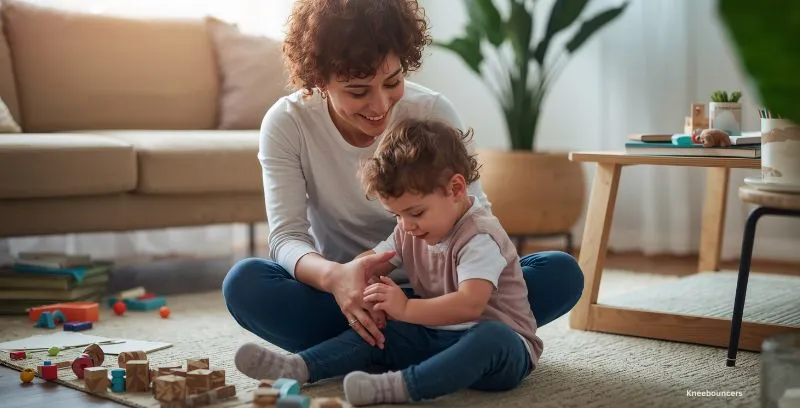
As a parent, you play a pivotal role in this developmental stage by providing literacy and language experiences and engaging in early learning activities that stimulate cognitive growth. Simple literacy activities like reading aloud, engaging in conversations, and singing songs can significantly enhance a child’s vocabulary and comprehension skills.
0 to 6 months
Your little one is too small for screen time yet, but you can talk, sing, or read the weather report; it doesn’t matter as long as you expose your baby to as much language as possible! Let your baby see your face as you talk to them because facial expressions will teach them a lot about social cues and the meaning behind words. Talking and interacting with your baby is the very first infant literacy activity you can do; it’s as simple as that!

As you play and interact, mirror their actions and copy their babble. Around four months old, your baby will be able to differentiate between noises and spoken language. By six months old, your little one will be making some vowel and consonant combos like ba-ba and da-da. So, engage them in conversation, allowing them to babble in response to your questions or statements.
6-12 months
Your baby’s first words are on the horizon. Most children say their first words between eight and fifteen months, so don’t stress if they reach their first birthday and haven’t said an actual word yet, especially if your baby seems to understand what you say and interacts with you socially and verbally. Coos, babble, mimicry, laughter, and smiling are all part of infant literacy and language development.
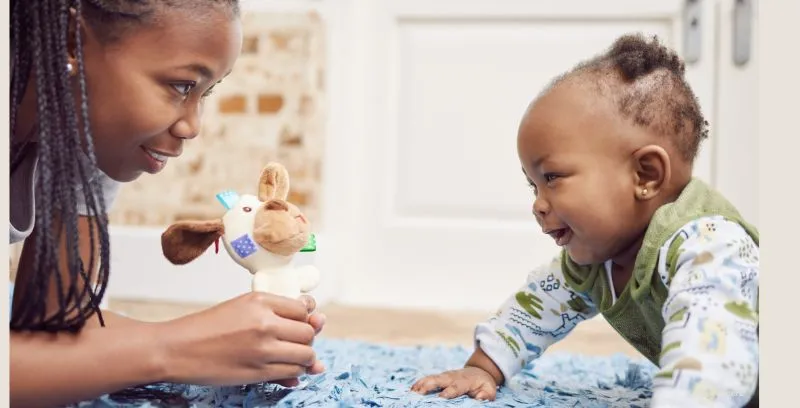
Around eight months, your baby will be able to hear different word sounds and understand where one word ends and a new one begins, but they won’t quite know what these words mean yet.
Somewhere in this window, they will learn what “No” means, even if they don’t always listen when they hear it! Keep the communication going and ask them questions. They will begin to point to objects they want or move towards them if they’re mobile. Continue naming objects for your child and reading to them daily!
12-18 months
Your baby should say their first words if they haven’t already, and probably quite a few more. Your little one’s earliest words will be those associated with their most significant needs. For example, ma-ma and da-da. They may say milk, develop a word for their pacifier or favorite toy, or say their sibling’s name.

They will also begin to understand more words and can probably point to many familiar objects or toys when asked. Your baby is ready for literacy materials such as scribbling with chunky crayons, looking through board books independently, singing and following along with finger plays, and listening to you read or make up stories!
18-24 months
You have a toddler now, not a baby. Toddlers observe and want to copy everything you do, including writing and reading. Engage your toddler in literacy activities by making lists on paper or the dry-erase board, writing out schedules, and using a wall calendar. Children must be exposed to writing in various forms to grasp its meaning.
Engage your child in writing the grocery list, labeling household objects with word cards, and coloring and drawing together. Toddlers love sidewalk chalk, and it’s an excellent way to practice their budding writing skills.
Don’t worry that they can't write actual letters or words yet or hold writing utensils correctly; at this stage, toddler literacy activities are all about getting them engaged and interested in reading and writing! At this stage, scribbling is an age-appropriate development!

The 18-24-month range is the perfect time to introduce toddler literacy games like our ABC Train. Your toddler is ready to start pointing at shapes and colors, and between 18 months and 3 years will begin to recognize individual letters. Letter learning is a gradual process, so the more exposure, the better!
ABC Train, designed for kids ages 2-5, introduces capital letters. Kids slide letters into place on the train, allowing them to practice fine motor skills simultaneously as they play.
In addition to seeing you write, your kids see you read, too—and not just on a tablet! Have actual books, magazines, and other reading materials around the house. Technology is great, but kids should be exposed to physical reading materials.
During these six months, your child will experience a language explosion, so don’t be afraid to use big and new words. The only way your child can learn what a new word means is to hear it used! Around two, your child will begin adding up to five new words daily to their vocabulary!
24-36 months
Hang on tight because your child’s language will continue to explode. They may even begin to recognize their name in print, along with letters or names they commonly see.
Continue literacy activities, like playing KneeBouncer letter-learning games, with them. To reinforce letter learning, try out KneeBouncer games like ABC Match Game and Ship Shape, designed for kids 3-5, that require them to identify letter shapes among other letters.
Your child will begin speaking in longer phrases and sentences. Kids this age love rhyming books and fingerplays and will often request the same book be read to them repeatedly. While somewhat tedious for parents, this repetition teaches your child essential literacy skills and is a precursor to reading.
At this stage, most people will understand your child when they speak. Avoid correcting them when they use incorrect grammar. Instead, continue to model the correct language for them. For example, if they say, “I want a ball,” you would say to them, “You would like the ball.”
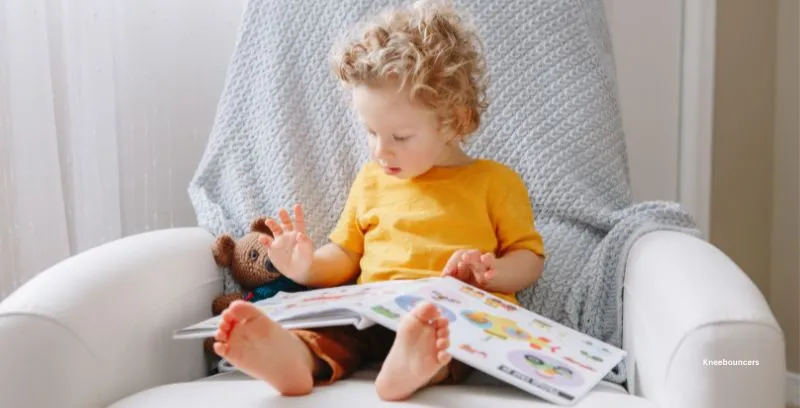
So much crucial literacy and language development happens during these first three years. Like all skills, children must be exposed to them with opportunities to practice and learn them. Literacy activities for infants and toddlers are one way you can practice and reinforce those skills. Even though your baby or toddler might not understand what you are saying, keep talking, singing, and reading to them and exposing them to language, and in no time, you’ll have a little one who loves and knows their ABCs.
Literacy Activities to Boost Your Baby’s Language Skills
Before your toddler is ready to play hands-on games, there are many infant literacy activities to do to boost their language learning! The more you surround your baby with language- and literacy-related content, the more their tiny brain will grow and develop!
Reading & Language Exposure
Read to your child daily, starting in infancy, several times a day if possible! Expose your baby to other languages or try to teach them words in another language. Research shows that multilingual children perform better in school, have increased social skills and empathy, have improved memory and problem-solving skills, and have stronger skills in their first language.

Even if you are not multilingual, you can introduce your baby to a new language using picture books, music, audiobooks, interactive language classes, or apps designed for babies.
Sing with your baby, recite poems and fingerplays, and let them play with soft or cardboard books designed for toddlers. As they grow, give them sturdy, age-appropriate books and let them explore and “read” to you! Encourage them to make up stories based on the pictures; doing so develops critical thinking, language, visual comprehension, and literacy skills!
The more you talk to your child and expose them to language, books, and other forms of visual print, the more words they will learn.
Playing Literacy Games with Babies and Toddlers
Literacy activities disguised as games help babies and toddlers learn to recognize letter shapes and sounds. They also teach them that words and letters have both written forms and meanings!
One of our free literacy activities for toddlers is the Alpha bet-you-can game! It is a toddler-friendly click game that teaches letter names and familiar words that start with the same letter. It’s a great way to introduce letters or reinforce learning through play!
Teaching letters through games keeps learning fun and interactive, which is the best way for kids to learn!
Send your toddler on letter hunts around the house, hanging up cards with different letters, or have them search through a favorite book for specific letters or pictures that begin with the letter of choice.
Play letter-matching games and point out letters in environmental print. For example, the “T” in Target or the “S” in Starbucks. Acknowledging environmental print teachers your child that letters have meanings!
The more you interact and play with your baby and toddler the more their literacy skills will blossom and grow! So what new literacy activity are you going to try today with your little one? What fun and creative ways do you have to ensure your infant is learning literacy right from the start? Remember you are their first teacher, there is no wrong way to engage an infant or toddler in literacy; all you have to do is talk, sing, and read!
Related posts
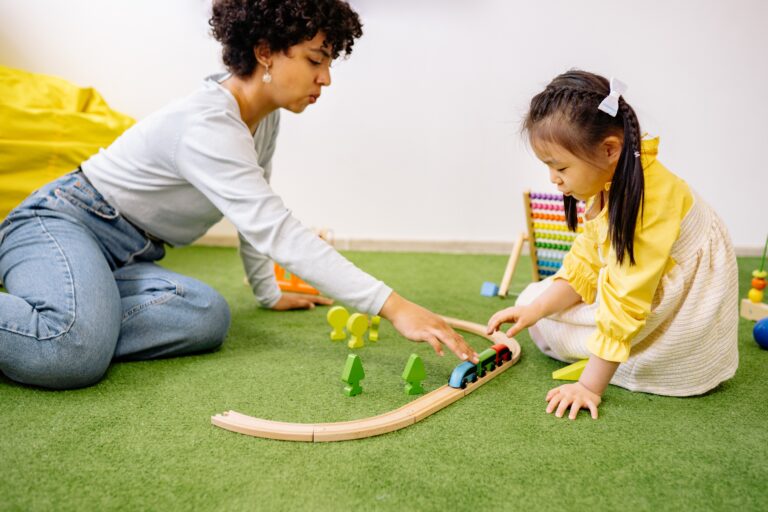
Play with Purpose: Reinforcing learning between play and KneeBouncer games


Rainbow of Fun: Colorful Activities for Toddlers and Preschoolers
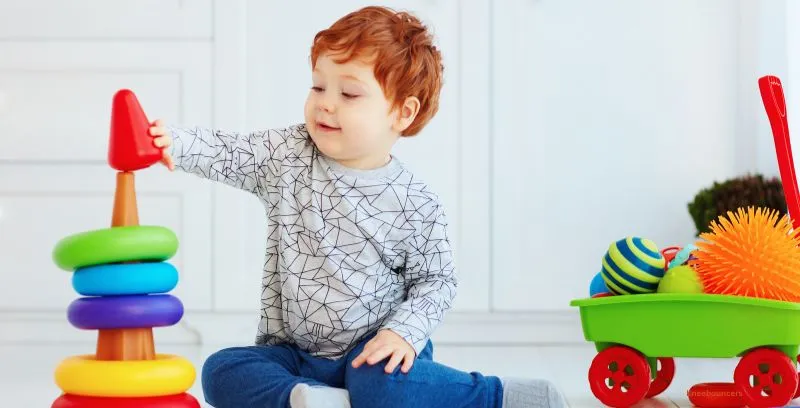
DIY Cause and Effect Play for Preschoolers; Building Self-Confidence Through Play

Arts & Crafts for Outdoors!

L. Elizabeth Forry
L. Elizabeth Forry is an Early Childhood Educator with fifteen years of classroom teaching experience. She earned a Master of Science in Early Childhood Education from The University of North Dakota and has a Bachelor of Arts in English and one in Music from Lebanon Valley College. She has taught children in Japan, Washington D.C., Chicago, and suburban Maryland. She is trained as a reading therapist, has a TEFL certification, and has done extensive work with children regarding mental health, social-emotional development, gender development. She has written curriculum for children and educators and has led training sessions for parents and educators on various topics on early childhood development. She is the mother of two boys and resides outside of Annapolis, Maryland.
Related posts
Play with Purpose: Reinforcing learning between play and KneeBouncer games
Rainbow of Fun: Colorful Activities for Toddlers and Preschoolers
DIY Cause and Effect Play for Preschoolers; Building Self-Confidence Through Play